Graduate Student Professional Development
One of MACH’s key goals is to train the next generation of leaders in transdisciplinary climate research and engagement. As a convergence science hub, MACH early career researchers are immersed in collaboration across different academic disciplines and in the co-production of knowledge between the research community and stakeholders. MACH policies and its Graduate Student and Postdoctoral Management Plan encourage MACH students and postdocs to be co-advised by multiple MACH experts, ideally with different relevant disciplinary perspectives.
MACH currently supports* 2 undergraduate students, 27 graduate students, and 4 postdoctoral researchers. MACH also engages 12 graduate students and 1 postdoctoral affiliate, each funded separately. MACH alumni include 4 undergraduate students, 6 professional master’s students, 9 PhD students, and 10 postdoctoral researchers.
*The above numbers reflect those engaged with the project as of June 2026.
Check out the ways we support early career researchers' development:
Individual Development Plan
MACH leveraged the NSF requirement that all federally funded students and postdoctoral associates have Individual Development Plans (IDPs) to develop a transdisciplinary MACH-oriented IDP addendum that is intended to help orient students and postdocs to their participation in MACH and align that participation with their career goals.
Summer Session Materials
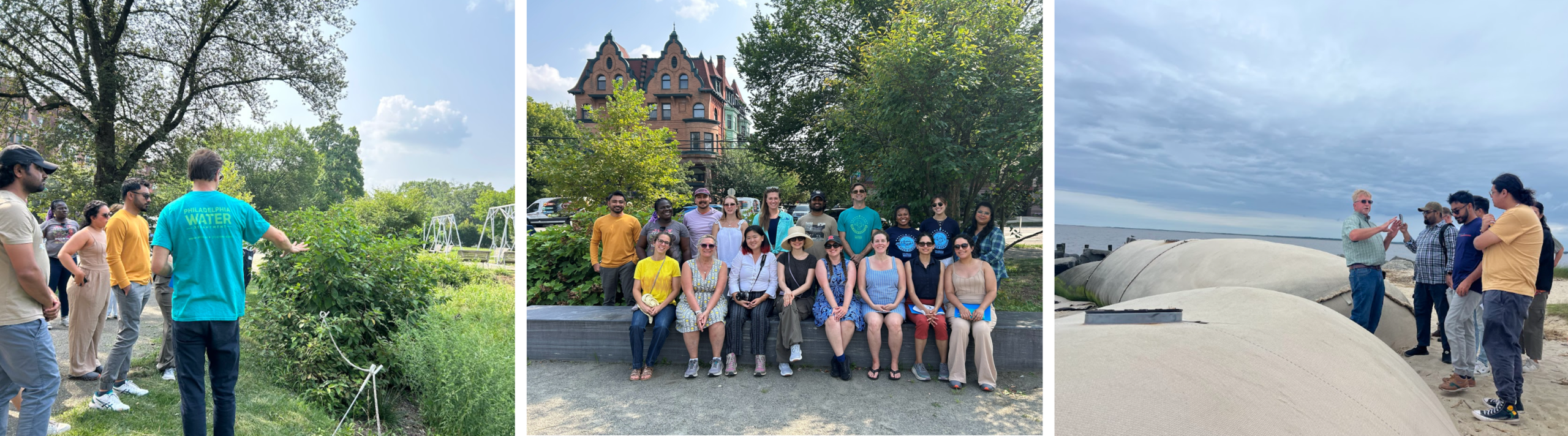
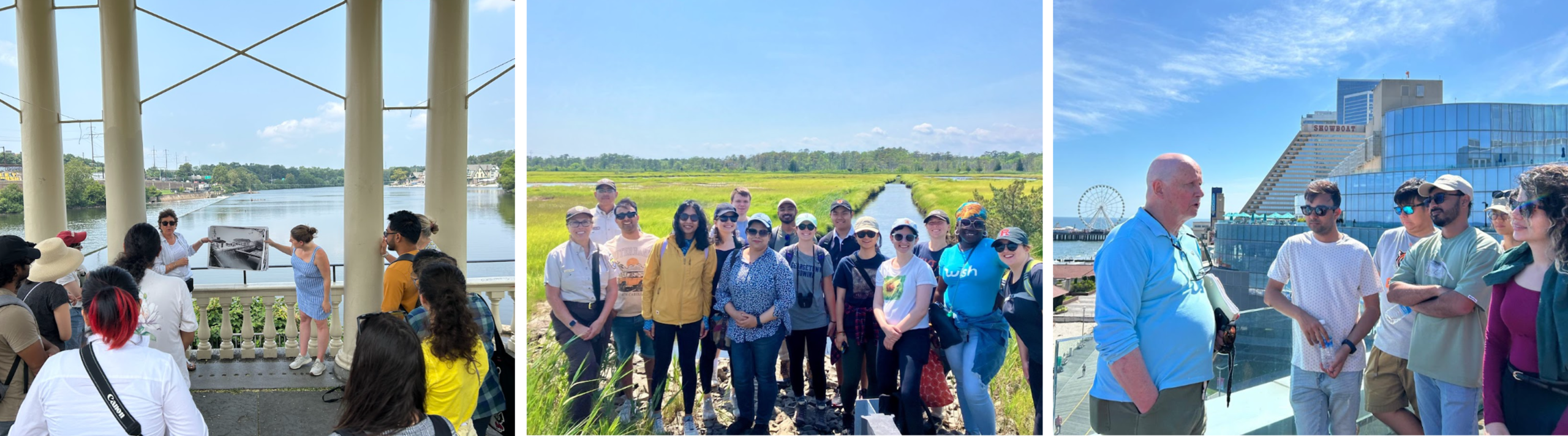
The MACH summer session is another avenue for MACH students and postdoctoral associates to receive professional training and develop skills. Since first being offered in the summer of 2023, three consecutive MACH summer sessions have been held, providing week-long, in-situ experiences that bring together MACH students, postdoctoral associates, stakeholders, science translators, and other researchers to learn about the diverse challenges associated with studying and managing coastal climate impacts.
Featured below are materials from our 2025 summer session, designed to foster meaningful dialogue around collaborative research and to prepare participants to extend their work beyond traditional academic pathways.
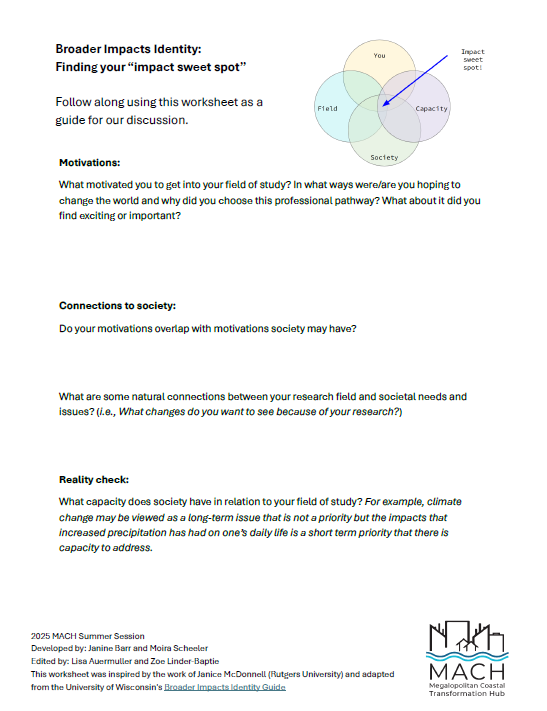
- Participants took part in a storytelling exercise, supported by the worksheet, "Broader Impacts Identity: Finding your impact 'sweet spot'", designed to help them connect their research to societal needs. Facilitators then led a group discussion, guiding participants through the worksheet questions and pausing throughout to encourage participants to share their responses aloud.
- Participants then considered how best to communicate their work and measure its impact. The worksheet, "Bridging Boundaries: Defining Success in Applied Research" was developed to help participants identify what success in extending their research beyond academic pathways might look like.
- Upon completing the activity, participants reflected on whether they had: (1) specific shared goals, such as information to communicate, end users of their data, and dissemination methods; and (2) broader shared goals, such as finding solutions to climate change and increasing awareness of climate-related issues.
Digital Portfolio Essentials
A strong digital portfolio can help students and early-career professionals showcase their research, expertise, and accomplishments to potential collaborators, employers, and broader audiences.
MACH staff led an online workshop introducing MACH students and postdoctoral researchers to the essential components of an effective professional portfolio, including research summaries, work samples, publications, presentations, and CVs.
- The presentation "Digital Portfolio Essentials" includes best practices for organizing content, communicating research to diverse audiences, maintaining an online presence, and creating accessible, user-friendly portfolio websites.
- The second part of the workshop guided participants through the process of using website platforms such as Wix and GitHub to create their own digital portfolios. The presentation titled "GitHub Pages" shares a brief overview of how to set up a portfolio using a GitHub template. This platform is ideal for researchers who have data to share or want more flexibility with the webpage design process.